
As the age old saying goes, when Too Good To Go gives you five packs of sliced salt beef, make chow mein.
When a surprise bag from Nisa Local contained five packets of sliced salt beef, we spent a while scratching our heads trying to work out different ways of using it.
We managed to use up three packets making salt beef quesadillas, and now we’re going to use up one more in a salt beef chow mein for one. The final packet became a salt beef, potato, and onion omelette.
Ingredients (with prices)
- One pack of the pre-cooked sliced salt beef – Too Good To Go bag (Nisa)
- Spring Onions – £0.69, Tesco
- M&S beansprouts – £0.85, Ocado
- M&S Medium Straight to Wok Noodles – £1.20, Ocado
- Blue Dragon Chow Mein sauce – £0.95, Ocado
- Sunflower, vegetable, or peanut oil
Serves: One (two if you’re serving with meat dishes or sides)
Of course, if you don’t have salt beef, you can use any protein you like. You can use shredded chicken to make chicken chow mein, prawns, pork, duck, or regular beef.
To make a vegetarian chow mein, you can use stir fried vegetables: use any veg you’ve got in your fridge, or be lazy and use a bag of pre-prepared stir fry vegetables.
As we always say, check what you’ve got in your cupboards and fridge before going shopping. The key to feeding yourself on a budget is to shop on a budget, and buying things you don’t need is just extra cost. You can adapt the recipe to fit whatever you’ve got. The wonderful thing about cooking is its flexibility. If, like us, you’ve got a collection of random cooked meats from a Too Good To Go grocery bag, then chuck those in.
If you’ve got dried noodles in the cupboard, don’t go out and buy straight-to-work noodles, finish the ones in your cupboard. When following the recipe below, you’ll need to add an extra step: cook the noodles as per packet instructions, however purposely undercook them by two minutes. The noodles will continue cooking when you add them to the wok, and if you initially boil them for the full time, you’ll end up with a mushy mein instead. Strain the noodles then keep them to the side in a bowl of cold water – this stops them from cooking further.
And lasty, if you don’t have a wok, then use a large frying pan instead.
Method
Step 1
Heat a large drizzle of oil in a wok. Once got, add the sliced spring onions and cook for a few minutes. Remove the onions from the pan.
Step 2
Slice the pre-cooked salt beef into thin strips and add to the wok. Cook for a minute, toss, and cook for another minute. If you’re using raw meat, you’ll need to cook, toss, cook, and toss until the meat is cooked through.
Step 3
Add the Blue Dragon chow mein sauce and toss to coat the meat. Cook for another minute, then add half of the bean sprouts. Stir fry for two minutes.
Step 4
Add both bags of the medium noodles (or your pre-cooked noodles) and stir fry until they’re piping hot, making sure the sauce coats every single noodle. You don’t want to serve it up only to discover big portions of noodles are plain. Serve immediately.
Step 5
Enjoy! Serve with egg fried rice, Chinese meat dishes, satay, duck pancakes, sweet & sour chicken balls, or eat your chow mein on its own. It’s up to you. Dig in!
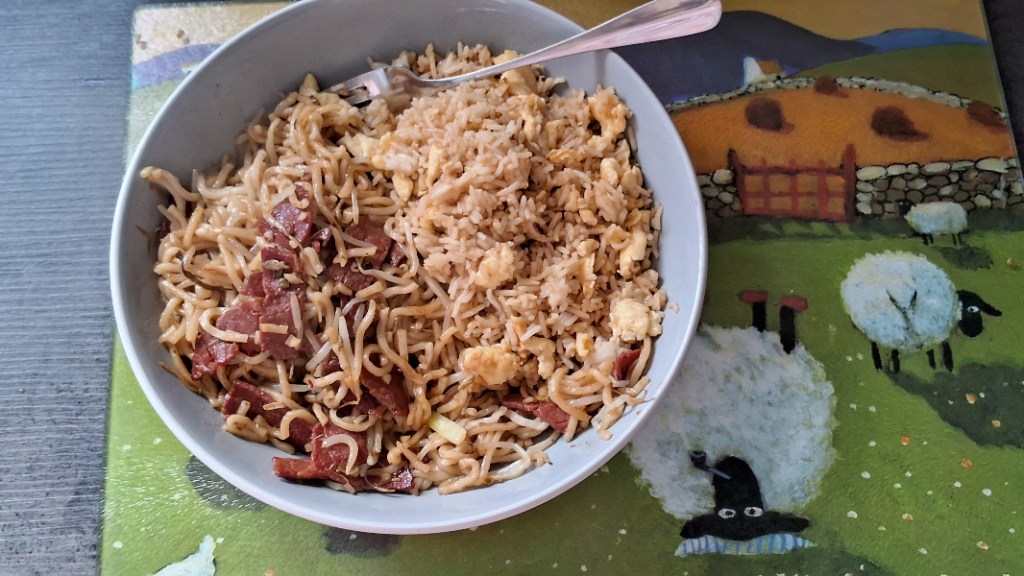
Would we make salt beef chow mein again?
Yes. Chances of us having five packets of salt beef in the house again are slim, but we’d make this chow mein again with chicken (we’ve always got a tray of chicken breasts in the freezer).
One taste-tester thought the salt beef chown mein was lacking something. Perhaps the Blue Dragon sauce wasn’t to their taste, so next time, we’ll add our own spices to it, like ginger, soy sauce, garlic, salt, until that missing ‘something’ returns.
But the overall opinion was positive. All of the salt beef chow mein was eaten which tells you all you need to know.