
Ever seen a recipe asking for self-raising flour, only to discover you’ve only got plain flour in the cupboard? Never fear. We’re here to save the day and tell you the difference, as well as how to turn your plain into self-raising.
What is flour?
Flour is produced when raw grains, such as wheat, barley, rye, and maize, are ground into a fine powder. There are many different types of flour, but they’re all classified the same way: powder from grinding grains, seeds, nuts, roots, or beans.
Flours made from rye, wheat, and barley contain the proteins – glutenin and gliadin – which form gluten once water is added. Gluten-free flours, such as cornstarch and rice flour, contain trace elements to no glutenin or gliadin, which make them suitable for those with gluten intolerances.
The balance of these two proteins and their densities within a flour are what give each flour its trademark characteristics. By kneading or mixing dough or batter, these proteins form strands of gluten; the more you interact with the flour, the more the gluten develops.
Breads have a denser, stronger texture than light and fluffy cakes, so you’ll need to interact less with cake batter to keep gluten development low.
What’s the difference between self-raising and plain flour?
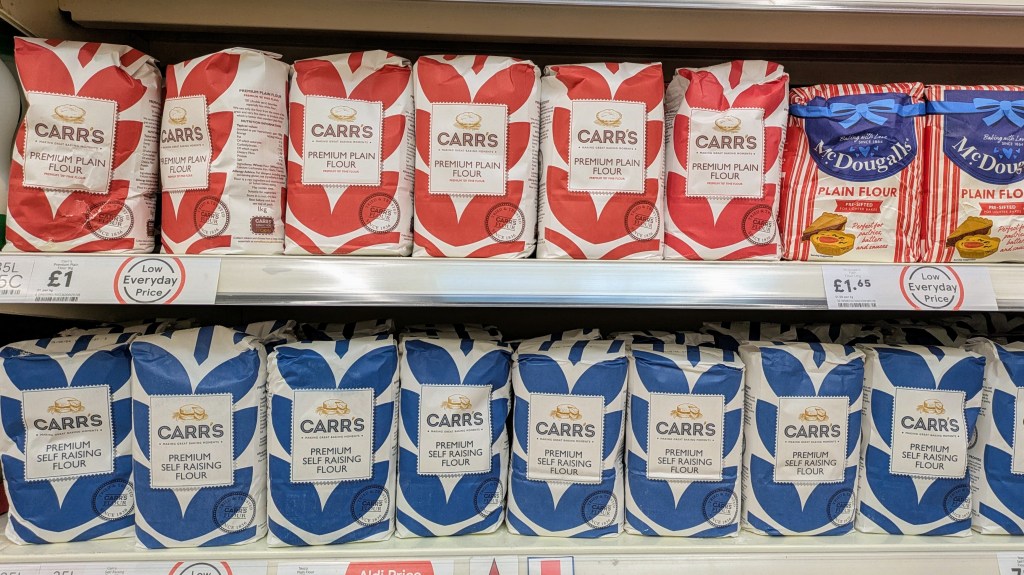
Plain flour is just that: plain wheat flour. When added to recipes, it doesn’t increase in height, as such, plain flour is ideal for pastry and biscuits.
Self-raising flour is plain flour that contains a raising agent, such as baking powder. It’s this raising agent that causes bakes to rise. As plain and self-raising are the same type of flour, they contain the same amount of glutenin and gliadin. Without the raising agent, these flours would perform in exactly the same way, trapping the same amount of air, creating the same amount of stretch, and producing the same level of rise.
Need self-raising flour but only have plain?
If a recipe calls for self-raising flour and you only have plain, don’t panic. For every 200g of plain flour you use, add two teaspoons of baking powder and you’ll get the same result as self-raising.
Are there other wheat-based flours?
While plain and self-raising flour are the easiest to buy, and arguably the cheapest, there are other types of wheat-based flour which are better suited to different types of bakes.
Strong flour: It has high levels of protein and results in a high-gluten dough. The dough is stretchy and ideal for baking yeast breads. You can also use strong flour to make sugar-free brioche.
Cake flour: Low in protein, high in starch. It’s milled finely and is used for all kinds of baking, from cakes to biscuits to crackers and pastry. Mainly found in American recipes, this bleached flour produces a bigger rise and a lighter texture. As bleached flour is banned in the UK, if a recipe calls for cake flour, use plain flour instead.
Wholewheat flour: Made with the entire wheat kernel, whole wheat flour is denser and less elastic than plain flour, due to the presence of bran. This flour is high in fibre and nutrients.
Wholegrain flour: This is similar to wholegrain flour, however has extra seeds and grains added in.


