Last modified on:
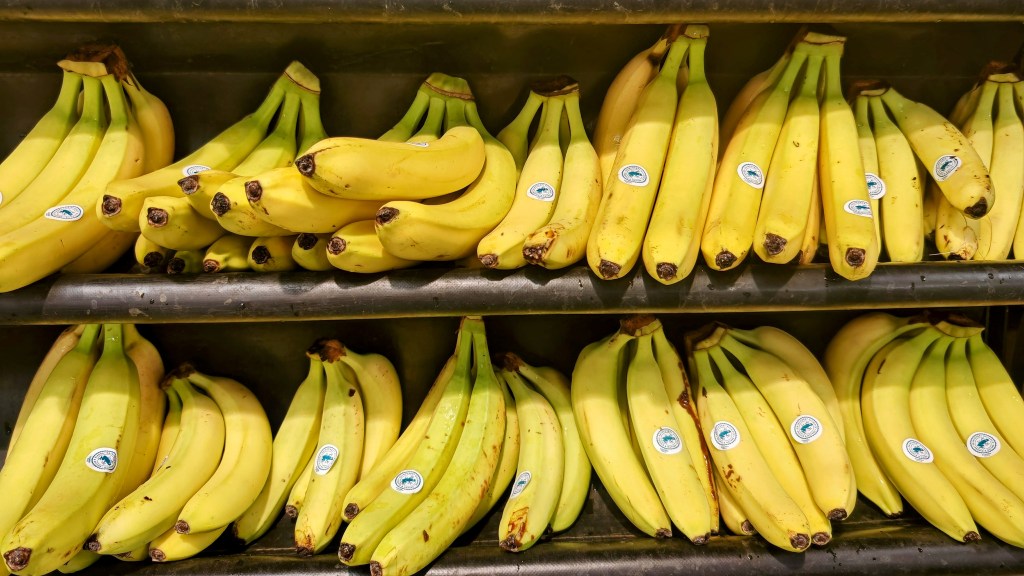
There’s nothing worse than buying a bunch of bananas and storing them in your fruit bowl, only to find they’ve gone brown and mushy when you go to grab one. While an overripe, brown banana is great if you’re planning to make banana bread, it’s not what you want for your pre-gym energy boost or your lunchbox.
We take a look at how to keep bananas fresh, where to store them to slow down the ripening process, or speed it up, ways to use up brown bananas to avoid food waste, and the health benefits of eating bananas regularly.
What is the best way to keep bananas fresh?
Store bananas in a cool dark place away from direct sunlight until ripe. Once ripe (completely yellow), move the bananas to the fridge. Queensland’s Department of the Environment, Tourism, Science and Innovation advises that moving a ripe banana to the fridge will preserve its life for a further five days. It also goes on to say that while the fridge will blacken the skin, the banana flesh inside will remain fresh.
To keep your other fruits fresh, experts also advise you to keep your bananas in a separate place. In an interview with the BBC, Dr Dan Bebber, of the University of Exeter, stated “bananas make other fruit ripen because they release a gas called ethene (formerly ethylene).”
Ethene causes cell walls to break down, starches to be converted to sugars, and acid levels are reduced. Generally, the higher the sugar levels in a fruit rise, the softer it becomes. Specifically, you should aim to keep from storing bananas with apples, avocados, kiwi, pears, tomatoes, berries, and leafy greens. Note, however, this list is not exhaustive.
Aim to buy bananas that are either green or just beginning to turn yellow. You may not be able to snack on one when you’re sat in the car, mentally preparing yourself for the week ahead, but you’ll know that when you get your bananas home, they’ll be at the beginning of their shelf life.
Ways to slow down the ripening process and reduce food waste
A banana is a climacteric fruit, which means it can continue to ripen after harvest. And as you’ve probably noticed, fruits and vegetables seem to have a far shorter shelf life than they used to. As such, you’re probably looking for ways to make your produce last as long as you can. Firstly, make sure you store your bananas properly, as we explain above, but there are also other steps you can take to keep bananas fresher for longer.
- Separate your bananas. The ethene gas they release speeds up the ripening of the other bananas in the bunch, not just other nearby fruits.
- Keep other fruits with release ethene gas away from your bananas.
- Tightly wrap the stems with cling film or tin foil. Doing so helps to slow the release of ethene gas. If you’re strapped for food storage space and have to store bananas with the rest of your produce, wrapping the stems will help preserve all of their lives.
- Hang your bananas up. This technique increases air circulation around the fruit, moving the ethene gas away from the bananas, and in turn, slowing the ripening process. You can keep it simple and tie them up with twine or buy a dedicated banana hook (£10 for a Lakeland Banana Tree). Hanging your bananas up will also make it easier to separate them from other fruits.
- Avoid bruising your bananas.
- Freeze your bananas. To increase the lifespan of your bananas beyond their five day shelf life, you can slice them up, or leave them whole, and freeze them. You can use a frozen banana to make a quick, no churn ice cream, smoothies or milkshakes (frozen fruit makes them thicker), banana jam, dip them in chocolate, or blend them and pour over a summery cocktail.
Uses for brown bananas
- The obvious one: banana bread
- Baked bananas
- Smoothie
- Pancakes
- Fairy cakes, muffins, and old-fashioned pudding
- Protein cookies
- Banana cheesecake
- Banana porridge
There are plenty of other ideas. There’s a whole host of creative recipes if you search for brown or overripe banana recipes, but we’ve just listed a few basic ideas to get your imagination working. Try a few different recipes, you never know, you might just find your next favourite thing.
If you have a dog, you can blend overripe bananas (and any other dog-safe overripe fruit you may have), mix with some dog biscuits (kibble), and fill a kong. You can give it to them straight away, or freeze it for use at a later date. It’s a nice treat and good form of enrichment.
Are bananas good for you?
Yes. Bananas are full of manganese, potassium, vitamin C, vitamin B6, carbohydrates, and fibre.
Heart, nerves, and energy
Manganese promotes the normal function of many body systems. Manganese works with other minerals to build strong bones, protect cells, aid brain function, and to maintain a healthy immune system. Manganese also plays a role in the breakdown of starches which can help regulate blood sugar levels. While this may sound good for diabetics, bananas also contain a lot of natural sugar, so you’ll need to watch your glucose levels when eating bananas. It does, however, make them a good thing to use as a recovery from a hypo.
The high carbohydrate and sugar content means a banana is good for exercise enthusiasts and gym goers, as it can both provide an energy boost and aid recovery.
Bananas are rich in potassium, a mineral which helps reduce the effect of salt on blood pressure, helps the movement of nutrients and waste in and out of cells, as well as contributing to the process of nerves responding to stimulation and muscle contraction. It’s potassium’s involvement with muscle contraction that means it’s a good regulator of blood pressure and heart health. It also helps prevent strokes and heart attacks, osteoporosis, and kidney stones.
This doesn’t mean eat a diet of bananas and nothing else. There are downsides of too much potassium, such as an irregular heartbeat and an increased risk of heart attacks.
Digestion
Its high fibre content promotes healthy digestion, as well as helping you feel full – a great fruit to snack on to tide you over until the next meal.
Improve your mood
Eating bananas as a snack may also help improve your mood. Bananas contain tryptophan, an amino acid that the body converts into serotonin. We all know serotonin is the happy hormone. So, simply put, a banana can make you happy.