

The humble potato – there’s a spud for everyone, whether they’re baked, roasted, chipped, or mashed. You know how you like them cooked, but to keep them fresh, you need to know where the best place to store them.
The best place to store potatoes
Don’t put your potatoes in the fridge; instead, put them in a cool, dark, and dry spot with good air circulation, whether that be your kitchen cupboard, garage, or a basement or cellar (if you have one).
But… Why?
The goal with potatoes is to keep them firm and stop them sprouting. We take a look at each element of the cool, dark, and dry storage instructions to learn why each is important.
Cool
First, the ‘cool’ part. A cool environment, between 7C – 12C, is to prevent them from sprouting.
We shut down storing your spuds in the fridge pretty quickly, that’s because the cold temperature causes the starches to break down into sugars. As a result, you’ll end up with a sweeter potato with a grainy texture, which isn’t what you want for a roastie.
Dark
To preserve the life of your spuds, you’ll need to store them in complete darkness. Exposure to light can make potatoes turn green, due to the increased production of solanine.
If you think a green potato is fine, think again: solanine is toxic.
Dry
Moisture can lead to the growth of bacteria and mould, as well as encouraging growth. In a humid environment, such as a kitchen cupboard close to where you cook, you’ll find your spuds will turn soft, blacken, or sprout before you have time to use them.
Air circulation
Store your potatoes in a hessian sack, ventilated container, or mesh bag to prevent moisture building up. As we said above, a humid environment will lead to mould and bacterial growth.
Can you store potatoes with other vegetables?
Avoid onions. As onions are also stored in cool, dry, and dark places, you might be tempted to store them in the same place as your potatoes. Well, don’t.
Onions, like bananas, release ethylene gas which can cause potatoes to sprout and spoil faster. Ethylene gas speeds up the ripening process, which isn’t what you want if you’re trying to keep your potatoes fresh and firm.
What can I do if my potato has sprouted?
You can plant it. Either slice off a chunk with the sprouted roots, or leave it whole, and plant it in a grow bag or a deep pot.
Give it a good water and leave it to do its thing. Water it regularly during bouts of dry weather as potatoes like damp soil.
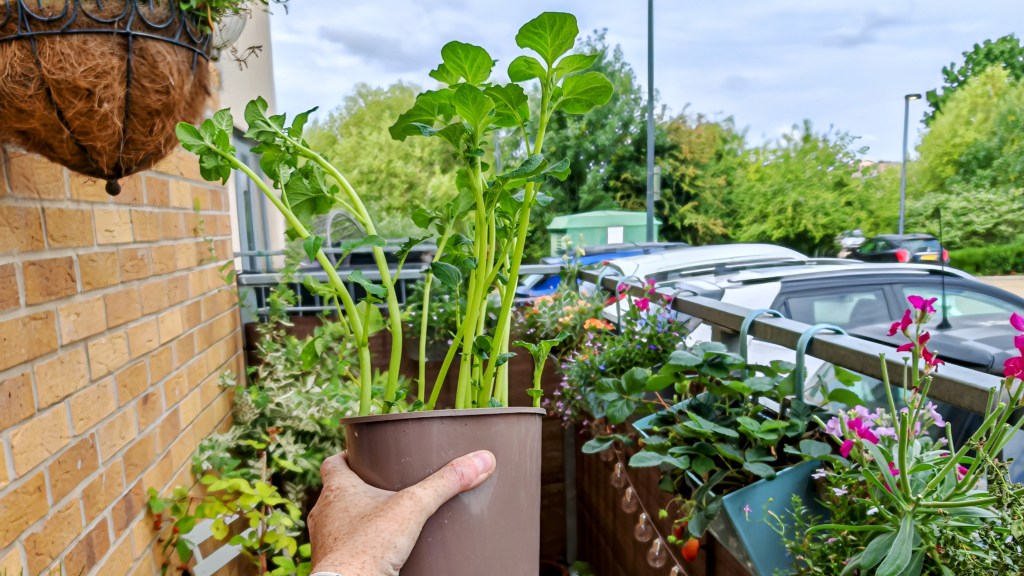
Let the green foliage grow, and in time, you’ll be able to dig up a dinner’s worth – or more – potatoes. For the price of zero pounds and zero pence. Planting old veg is a great way for kids to learn where their food comes from, it’ll keep them busy for half a day, and you’ll also have the pride of saying you’ve grown your own potatoes.