
There are different types of eggs you can buy other than chicken, which is the most common type you’ll find in supermarkets. We all know what a chicken egg tastes like and how to use them in our cooking, but what about the others?
We take a look into some of the other types of animal eggs you can buy, their flavour, and ideas on how to use them in your cooking.
Types of eggs
Chicken eggs
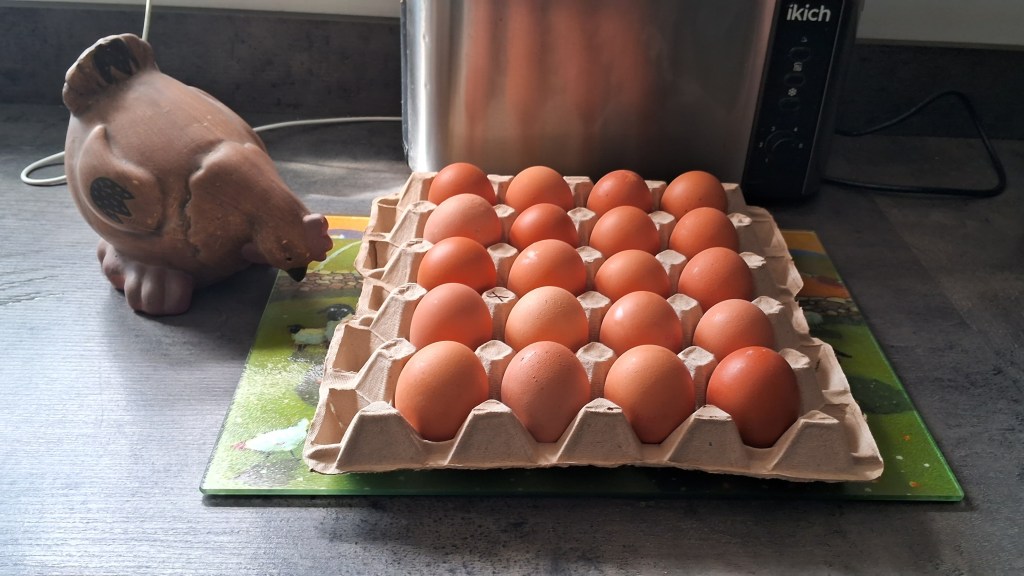
The most common type of egg, available in white or brown depending on which breed of hen laid it. In general terms, white hens lay white eggs, brown lay brown, however some speciality breeds can lay different colours.
The brown is due to a pigment called protoporphyrin, which coats the shell. And while it is generally understood that brown eggs are healthier than white, it is, in fact, a myth. It’s just that – a colour difference. The nutritional profile of the egg remains the same, brown or white.
You can use chicken eggs for most bakes, such as brownies, cakes, brioche, pasta, and so on. They’re also a breakfast staple, whether served fried, scrambled, or as an omelette.
Duck eggs
With a bigger yolk and denser nutritional content than a chicken egg, a duck egg is characterised by its bigger size and trademark colouring. ‘Duck egg blue’ is a popular choice of colour for kitchens and hallways for a reason. But, that light shade of blue isn’t the only colour of duck egg available; you can find shells of blue, green, white, and from some specific breeds, charcoal. As with chickens, the colour is purely genetic and has no impact on the flavour or nutritional profile of the egg inside.
You can use duck eggs as a direct substitute for chicken eggs, particularly where you want a richer flavour. Cakes, custards, biscuits, and scotch eggs, for example. The higher fat and protein content will result in a greater rise and a fluffier texture, as well as reducing the likelihood of your bake drying out.
Goose eggs
Known for their size, a goose egg is a good two to three times larger than a chicken egg. As such, even though the yolk is more nutritionally dense, you’ll find goose eggs far higher in protein, fat, and nutrients. While a chicken egg has an average of 4-6g of protein, a goose egg averages 20g.
Goose eggs are only available seasonally, so you’ll need to keep an eye out in your local farm shop. They’re also considerably more expensive than chicken eggs, costing around £4 per egg. Your bakes, omelettes, and custards will be expensive, but oh, will they be rich.
Quail eggs
Quail eggs are tiny, hard to peel, and are identified by their cream, brown-speckled shells.
In certain parts of the world, quail eggs are treated as a delicacy.
Limited by size, their nutritional content doesn’t quite match that of chicken eggs, however, that doesn’t stop them containing important nutrients. Use quail eggs as a starter or a garnish, just don’t eat them raw.
Turkey eggs
Didn’t know you could buy these? No, nor did we. We’ve never seen them for sale and, after some thorough searching, managed to find some for sale from a London-based grocer. Currently out of stock, we found out turkey eggs are very expensive to buy.
Taste-wise, if you do manage to buy some, turkey eggs produce a creamier texture than chicken eggs and are slightly larger, but are otherwise incredibly similar.
Ostrich eggs
Of all of the egg-laying birds on planet Earth, ostrich eggs are the largest.
A single ostrich egg contains a full day’s worth of calories; unsurprisingly, they’re also richer in taste than a chicken egg, with a more buttery and gamey flavour. Surprisingly, of all the eggs on this list, ostrich eggs are the best substitute for chicken eggs.
They also cost a staggering amount more: you can get a single ostrich egg in Waitrose for £20. For one. You can look at the price in a different way though – you can eat a full day’s calories for £20.
Bantam eggs
Bantam eggs are essentially just eggs from smaller chickens. Smaller chickens equal smaller eggs.
Other eggs
The list above isn’t exhaustive. You can eat pheasant eggs, probably easier to find if you’re in the countryside. Local butchers and farmers will be the best place to look if you’re after a pheasant egg.
On the rarer side of things is an emu egg. One emu egg gives you roughly the same amount of food as 10 chicken eggs. Like ostrich eggs, one from an emu will cost you around £20 from a specialist farm. Unlike ostrich eggs, you won’t see an emu egg while browsing your nearby supermarket.
Chicken egg definitions
Free-range: The eggs come from chickens that have access to the outdoors
Organic: The eggs come from chickens that are raised with organic feed and standards, as well as having access to the outside
Barn: Self explanatory, really. These chickens are housed in large barns and have some roaming space.
Caged: If you see these eggs in the shop, they are often sold at a lower price than the other types. (You can get 15 for £2.15 in Tesco, for example.) These eggs are laid by chickens that are kept in cages, also known as battery farm chickens.
I tend to buy my chickens from the local farm shop, the eggs are bigger and yolks are creamier plus on occasions you get a double yolker.
Common eggs dishes
At Simple & Homely, we use a lot of eggs. Eggs are high in protein, filling, and are rich in vitamins, minerals, and antioxidants. They’re good for eating a cleaner diet, whether you want to lose weight, lower your blood pressure, increase your protein intake, lift your mood (hello, vitamin D), and improve normal brain and cell functioning.
Fried eggs – Sunny side up, over easy, or hard it’s up to you. You can cook fried eggs in the microwave, in a pan, or on a skillet and you can serve them with a variety of meals, not just on toast at breakfast.
Scrambled – Hard or soft your choice. You can cook scrambled eggs in a microwave, in a pan, wok, pot, or on a skillet. You can serve them on toast, potato waffles, stir them into egg fried rice, or make a Bulgarian style mishmash.
Poached – A poached egg is the healthiest of the cooking methods; you crack an egg into boiling water then spoon it out. Again, you can eat this with most meals at any time of the day.
Boiled – You can hard boil your egg to make egg mayo or go for a soft yolk to dunk soldiers. Look at our how to boil an egg guide for timings.
Baked – Crack an egg into an oven dish and bake it. You can do this if you’re cooking potato wedges and veg, eggs in purgatory (yes, you don’t have to bake this), or anything you fancy an egg with. You can add an egg to pizza mid-cook as well, if you want to.
Omelette or frittata – Omelette and frittatas aren’t fussy, you can fill them with anything you have to hand. We made a salt beef omelette to use up items we got in a Too Good To Go bag, for example. Potato, onion, peppers, cheese, ham, chicken, mushrooms, chilli, the list goes on. The more you fill your omelette with, the more of a meal it’ll become.
Pickled – Boil it, peel it, soak it in a vinegar solution. Leave your pickled eggs in a jar of vinegar and eat whenever you don’t have friends round.
There are also plenty of other recipes that use eggs. Whether you’re baking, making scotch eggs, pasta, pancakes, or a quiche, there’s no such thing as a leftover egg.


