Just because you’re a vegan doesn’t mean you can’t enjoy some homemade cakes and biscuits. We’ve already shown it’s possible to make your bakes sugar-free and gluten-free, so why not animal-product free too?
Here are some alternatives you can use to make some delicious sugary (or not) homebaked goods.
Vegan baking fat
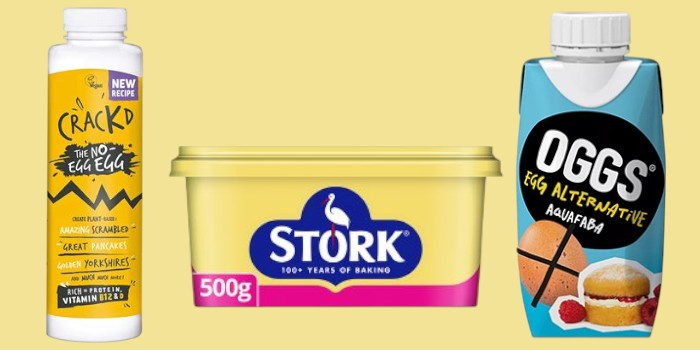
Starting with the baking butter. Swapping the dairy-based butter for a plant-based spread is the easiest swap on this list. We often use Stork in our baking, a brand now completely dairy-free and vegan, and find it produces bakes no different to using dairy butter. Check out our coconut sugar marble cake or our honey and cinnamon biscuits if you don’t believe us. The spread itself is a bit softer than milk-based butter, but the difference is negligible.
Stork baking spread can be expensive, but never fear, supermarket own-brands are here. You can head to your local supermarket and find plant-based, unsalted alternative butters in the dairy aisle. You don’t even have to look too hard.
Vegan baking alternative to eggs
Now we go onto the more difficult part: alternative eggs. Swapping eggs for a vegan alternative isn’t a one stop shop. The item you use from the list below will change depending entirely on what you’re baking.
Aquafaba
Never heard of this one before? No? Us neither. Aquafaba is, quite simply, whipped up chickpea water. Grab a can or two of chickpeas, drain the water into a bowl (saving the chickpeas to use in a dinner), and whisk them up.
Aquafaba can be used as an egg white alternative, great for meringues or pavlova. Use aquafaba in our semifreddo lemon meringue cheesecake to make your own meringue instead of the shop bought ones we use. You can also make a vegan Eton Mess.
Flaxseed
To swap your egg for flaxseed, you’ll need to use the ratio:
1 egg = 1 tablespoon ground flaxseed + 3 tablespoons of water
Flaxseed can be used for baking, and, along with the Stork baking spread, you can make yourself a lovely Victoria sponge cake, with jam and fresh strawberries for decoration.
Chia seeds
Similar to flaxseeds, chia seeds also need to be mixed with water before being used in a bake.
1 egg = 1 tablespoon ground chai seeds + 3 tablespoons of water
Chia seeds as an egg replacement are best used for pancakes, cookies, and no-bake desserts. For example, a vegan chocolate mousse topped with fresh berries – if you’re stuck for ideas.
Applesauce
Generally, swap one egg for 60g of applesauce, but only in bakes where egg is used as a binding agent. To make your bake lighter, you’ll need to add half a teaspoon of baking powder to the mix.
Applesauce is a good alternative for egg in a sweet bake, like a Dutch apple cake or sultana sponge pudding.
Pumpkin puree
Pumpkin puree can be substituted for eggs in some recipes, such as breads, muffins, and biscuits. As the puree has a higher liquid content, you’ll need to adjust the wet ingredients in your mix to make sure you get the right consistency. You also may need to add a quarter teaspoon of baking powder to get a proper rise.
1 egg = Approx 80g of pumpkin puree
We reckon our coconut sugar brownies will work with a pumpkin puree replacement.
Baking soda and apple cider vinegar
While this may sound a tad strange, you can use a combination of baking soda and apple cider vinegar to replace eggs in baking. If your recipe is for a light and airy bake, you can substitute the eggs in the following ratio:
1 egg = 1 teaspoon of baking soda + 1 tablespoon of apple vinegar
This combination is best for quick recipes, not any that require resting or proving. Try baking a jam doughnut muffin, a marble cake, or fairy cakes.
Silken tofu
More for savoury dishes than sweet treats, silken tofu can replace eggs in a carbonara or egg fried rice – just crumble or mash it in.
1 egg = 60g silken tofu
You can also use silken tofu in sweet bakes if you want to. Dr Oetker uses silken tofu in their vegan chocolate cheesecake, for example. Our no bake Twix cheesecake doesn’t call for eggs, but to make it extra silky and thick, you could add a small amount to the cheesecake mix.
Plant based yoghurt
Where egg isn’t the only liquid, you can replace it with plant-based yoghurt. You can find plant-based yoghurts in most supermarkets down the dairy aisle… at a slightly higher cost to its shelf neighbours.
Remember, as yoghurt is more liquid than eggs, you’ll need to adjust the other ingredients to retain texture.
You don’t have to stick to plain, either. Try vanilla, almond, honey, or berry flavour yoghurt instead; it’ll give a deeper flavour to your bake. Use berry flavour if you’re making a Black Forest gateau, or coconut for a tasty pina colada dessert.
You can also use plant-based yoghurt in greek flatbreads or non-traditional pizza bases.
Bananas
Mashed up bananas can be used as an egg substitute. But, as you well know, bananas come with a strong flavour. Choose flavours that pair well with banana, like walnut or almond, chocolate, or fresh strawberries. You could always make a vegan banana bread: a great way to use up your overripe bananas.
Oggs
As we mentioned above, aquafaba is a great egg replacement. And Oggs, a vegan baking brand, uses aquafaba in their egg replacement cartons. Available in most UK supermarkets, you can buy a 200ml carton (four eggs), one litre (20 eggs), or 10 litres (a lot of eggs). From their site, they only sell in bulk, so if you’re only buying to try it out, you’ll be better off going to the supermarket.
Crack’d
“The no-egg egg” uses pea protein in their liquid whole egg replacement. Crack’d no-egg egg cartons are stocked in Asda, and are marketed to be as a direct alternative to eggs. Their website has recipes for both sweet and savoury, which is incredibly handy for getting started. As with Oggs above, we haven’t tried using Crack’d in recipes, so we can’t comment on how well they work. If you have, get in touch and let us know how it went.
Happy baking!